
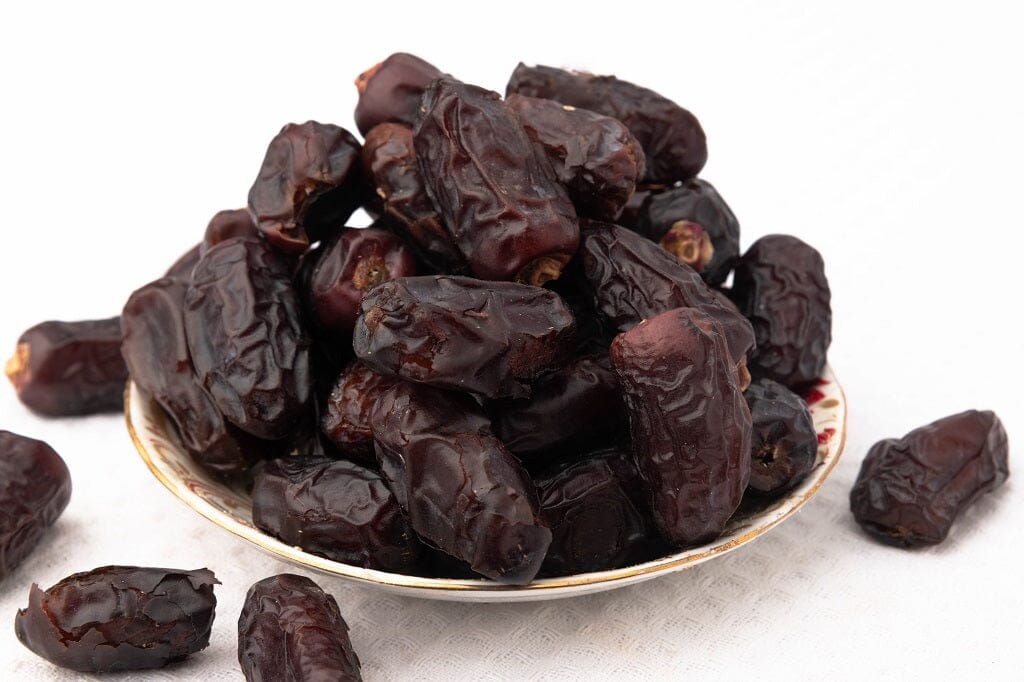
What Kurma Safawi actually is
Kurma Safawi comes from Madinah, the same growing region as Ajwa. The skin is dark brown, almost black once fully ripe, with a thin wrinkle rather than the smooth gloss of a Medjool. Underneath that skin, though, Safawi is soft and creamy. Buyers who expect a dry, leathery date because of the dark colour are usually surprised at how much it gives when you press it.
Taste and texture
Fresh Safawi has a caramel sweetness with a light toffee note, and the flesh is thick rather than thin and papery. It sits closer to Medjool on the softness scale than most people assume, though the flavour is its own thing — less floral, more straightforward sweet. Stock that has sat too long in a hot warehouse loses that softness first; a Safawi date that feels stiff or sandy on arrival has usually dried out in storage, not because the variety is naturally firm.
Safawi vs Medjool vs Ajwa
Buyers shopping for Safawi often land on Medjool listings by mistake since both sit at the premium end and both are soft. Medjool is the larger of the two, with a more caramel-forward flavour and a lighter brown skin; buying dates online means reading the variety name carefully before checkout, not just the price. Ajwa, grown in the same Madinah orchards as Safawi, is also soft but denser and darker, with a flavour that leans less sweet. Our separate guide to Ajwa dates covers that variety in more depth if you are weighing the two Madinah dates against each other.
Why size and grading vary between sellers
Cultivation method, harvest timing and storage conditions all affect the final size and moisture of a Safawi batch, which is why two sellers can list the same variety at different sizes. Sorting adds cost: graded, size-consistent stock takes more labour to sort than an ungraded mixed batch, and that labour shows up in the price. Consistent sizing and grading is one of the more reliable signals that a supplier is investing in quality control rather than just moving volume. Our notes on date prices and grading systems in Malaysia go into how those grades map to price.
Checking a supplier before you buy
A few checks are worth doing before ordering, especially online where you cannot see or smell the batch first. Read recent reviews on the seller's own page and on third-party marketplaces, not just the testimonials the seller picked. Ask directly about harvest year and storage conditions if the listing does not state them. Look at the packaging: dates that travel in sealed, food-safe packaging arrive in far better condition than loose-packed stock, particularly in Malaysia's humidity.
Storing Safawi at home
Kept in an airtight container in the fridge, Safawi holds its softness for several months. Left at room temperature in humid weather, it still dries out faster than it would in a sealed container, so an opened pack is best moved to the fridge once you have taken what you need. If you buy in bulk, split the stock into smaller sealed portions so you are not opening and resealing the whole batch every time.
Buying it locally
Whichever seller you choose, match the variety name on the listing to what actually arrives; a Safawi date that looks dry and stiff rather than soft and creamy is worth questioning with the seller. For general guidance on comparing Malaysian date retailers, see our guide to buying quality kurma in Malaysia and our notes on Medjool pricing if you are weighing the two varieties against each other.