
What matters is the packet in front of you
Most buyers never see a lab report. What they check is the box on the shelf — and that is exactly where Malaysian law puts the responsibility. Under the Food Act 1983 and Food Regulations 1985, every packaged date sold here needs a label carrying the product name, net weight, the importer or packer's name and address, and a best-before date. Missing any of those four is a fair reason to put the box back and pick a different one.
Reading the label like a buyer, not a chemist
Country of origin tells you what you are actually paying for: Ajwa comes from Madinah, Medjool from Palestine or Jordan, Mariami and Piarom from Iran, Deglet Noor from Tunisia or Algeria. A label that just says "product of dates" with no country named is worth a second look. Check the halal mark too — it should be the actual JAKIM hologram, not a green sticker printed by the trader; JAKIM's own portal lets you look up a certificate number if you want to be sure. Somewhere near the best-before date there is usually a short batch or lot code. That code is how a supplier traces a bad batch back to one shipment, and a pack without one gives nobody anything to trace.
What the fruit itself tells you
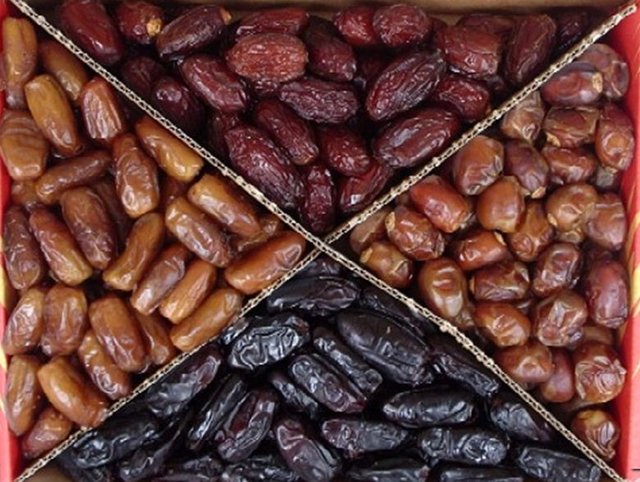
Before origin and paperwork, the dates do most of the talking. A thin white, sugary crust on the skin is glucose crystallising out as the fruit dries — common on Ajwa and Safawi, and harmless. Fuzzy grey-green patches, a sour fermented smell, or wet clumping inside a sealed pack are a different matter, and mean the batch goes back to the supplier rather than into the fridge for later. As a pemborong kurma (date wholesaler) will tell you, keeping moisture under control during storage is usually the whole difference between the two.
Loose versus packaged: different trade-offs, not different safety levels
Buying loose from a bazaar Ramadan stall or an open tray lets you smell and press the fruit yourself, but there is no label and no batch code to fall back on if something turns out wrong later. A sealed retail pack gives up that hands-on check in exchange for a controlled environment and a printed trail back to source. Neither option is automatically the safer one — know which trade-off you are making before you buy, and match it to how much you trust the seller in front of you.
A short checklist before paying
Label complete — name, net weight, importer, best-before date? Halal mark checks out under a proper look, not just a glance? No wet clumping, no off smell, packaging intact and not resealed? Price roughly in line with what a genuine wholesale dates pricing guide shows for that grade — a AAA Medjool priced like an ordinary Sayer is worth questioning before it is worth buying.
Buyers placing a real order rather than a bag or two should read the commercial guide to buying and selling kurma in bulk before contacting a supplier — it covers what to ask before committing to a quantity. And if origin on the label is the part you are unsure about, local gems and imported delights breaks down which varieties are actually grown here versus shipped in, which makes spotting a mislabelled country of origin much easier the next time you shop.