
What "Borong Kurma Ajwa Malaysia" actually means for a buyer
Borong Kurma Ajwa Malaysia is wholesale buying, not a shop counter. You are ordering by the carton, not the pack, and Ajwa is grown in one place — the Madinah region of Saudi Arabia. Everything else sold under that name is either genuine Madinah Ajwa or a different variety wearing the label. A wholesale order is where that distinction actually costs you money, because a mislabeled carton is a mislabeled carton times fifty.
Ramadan changes the ordering calendar, not just the price
Demand for Ajwa in Malaysia climbs sharply from Sya'ban onward and peaks in the two weeks before Ramadan. Suppliers with a fixed shipping schedule from Saudi Arabia sell out their Ramadan-timed stock early, sometimes by mid-Sya'ban. If you order in the same week everyone else does, you get whatever is left — often an older harvest or a smaller-carton substitute. Ordering six to eight weeks ahead of Ramadan is the difference between choosing your grade and taking what's still on the shelf.
Carton sizes and what they mean in practice
Ajwa typically moves in 1kg retail packs boxed into 5kg or 10kg cartons for wholesale. A 10kg carton usually prices better per kilo than five separate 1kg orders, but only if you can move the stock before it dries out further in storage — Ajwa is already a firm, low-moisture date, and prolonged storage in a hot store room accelerates hardening. Buyers running a single retail counter are often better off with 5kg cartons ordered twice than one 10kg carton sitting half-used for a month.
Checking a carton before you commit to the next order
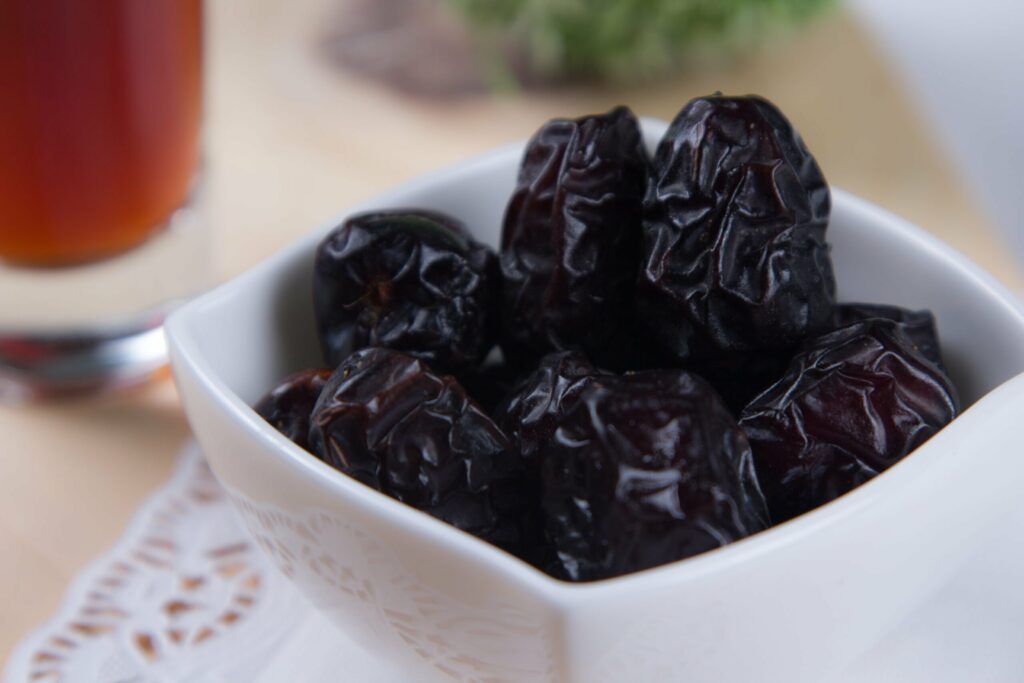
When a carton arrives, open it before it goes into storage. Genuine Ajwa is dark, almost black-brown, with a matte skin and a firm, slightly chewy bite — not glossy or sticky. A carton that smells fermented or shows a white sugar bloom across most of the dates has been stored too long somewhere upstream; that's a reason to flag it with the supplier, not just push it onto the shelf. Keeping one sample date from each carton for comparison makes it easier to catch a supplier who starts quietly substituting stock mid-contract.
Where dates go once the Ramadan order lands
Dates don't stop moving once the festive rush passes — the same carton logic applies year-round for retailers who keep a standing dates section, just at a lower order frequency. A supplier relationship built during Ramadan buying, when volume is highest and leverage is real, is the easiest time to negotiate the terms — carton pricing, delivery lead time, return policy on damaged stock — that carry you through the quieter months.
For buyers comparing carton pricing across grades, our grading systems guide covers how the letter and size grades map to price, and our Medjool pricing breakdown is a useful comparison point if you're weighing Ajwa against other premium varieties for your shelf. For the commercial side of ordering — quantities, terms, supplier vetting — see our wholesale buying guide.
Key takeaways
- Genuine Ajwa comes from Madinah only; verify origin before ordering at wholesale volume, where a mislabeling error multiplies.
- Order six to eight weeks ahead of Ramadan — suppliers sell through their best-timed stock early.
- Match carton size (5kg vs 10kg) to how fast you actually move stock, not to the better per-kilo price alone.
- Inspect a sample carton on arrival: matte dark skin and firm bite are normal; fermented smell or heavy sugar bloom is not.