
What "rare date variety" actually means when you're buying
A lot of listings slap "rare" or "exotic" on a date that's really just Medjool at a higher price. A genuinely different variety changes in three things you can check before you buy: texture, sugar level, and how it's meant to be eaten — fresh, semi-dried, or fully dried. Here's how a few of the less common names actually differ, so "rare" means something when you're paying for it.
Ajwa and Safawi: often confused, not the same date
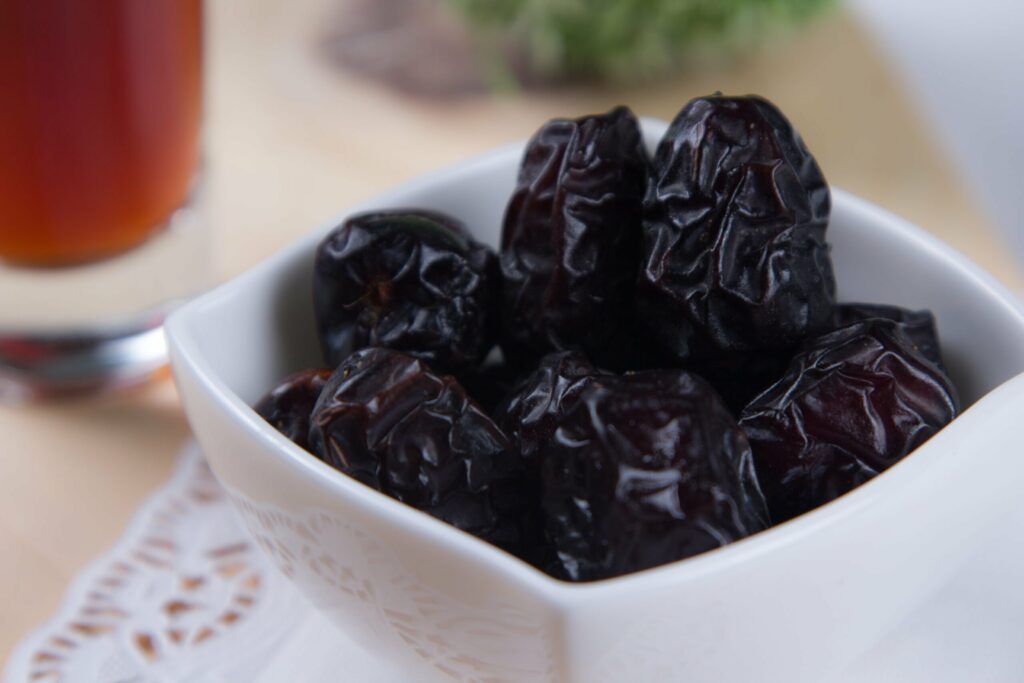
Both come from Madinah and both are dark, almost black. Ajwa is the smaller of the two, drier, with a wrinkled skin and a firmer bite — it's usually sold in smaller trays because it's denser and a little goes further. Safawi is larger, softer, glossier, and noticeably sweeter on the first bite. If a seller lists them at the same price per kilo, ask which one it actually is; they don't cost the same to bring in.
Deglet Noor: the baking date, not the snacking date
Grown mainly in Tunisia and Algeria, Deglet Noor is lighter in colour, firmer, and noticeably less sweet than Medjool or Safawi. It's the variety used in a lot of commercial date paste and baking because it holds its shape when chopped instead of turning to mush. If a recipe calls for chopped dates and you use Medjool instead, expect a stickier, sweeter result than the recipe intended.
Khalas: the Gulf's mid-range everyday date
Khalas is what a lot of households in the UAE and Saudi Arabia actually eat day to day, rather than saving for guests. Medium size, golden-brown, balanced sweetness with a slight citrus edge — it's less showy than Medjool but a fair bit cheaper when it's genuinely imported rather than repackaged.
Reading a listing before you buy
Three questions cut through most of the marketing: where was it grown, is the size and colour consistent with that origin, and is the price close to what that variety actually costs wholesale. A tray labelled "rare Arabian dates" with no variety name is usually just Safawi or Khalas without the name attached, priced as if it were Ajwa. Our Medjool pricing guide is a useful anchor for comparison, and the bulk buying guide covers what changes when you're ordering in volume rather than a single tray. If you'd rather just see what's in stock, our homepage has current listings, and about us covers how we source.