
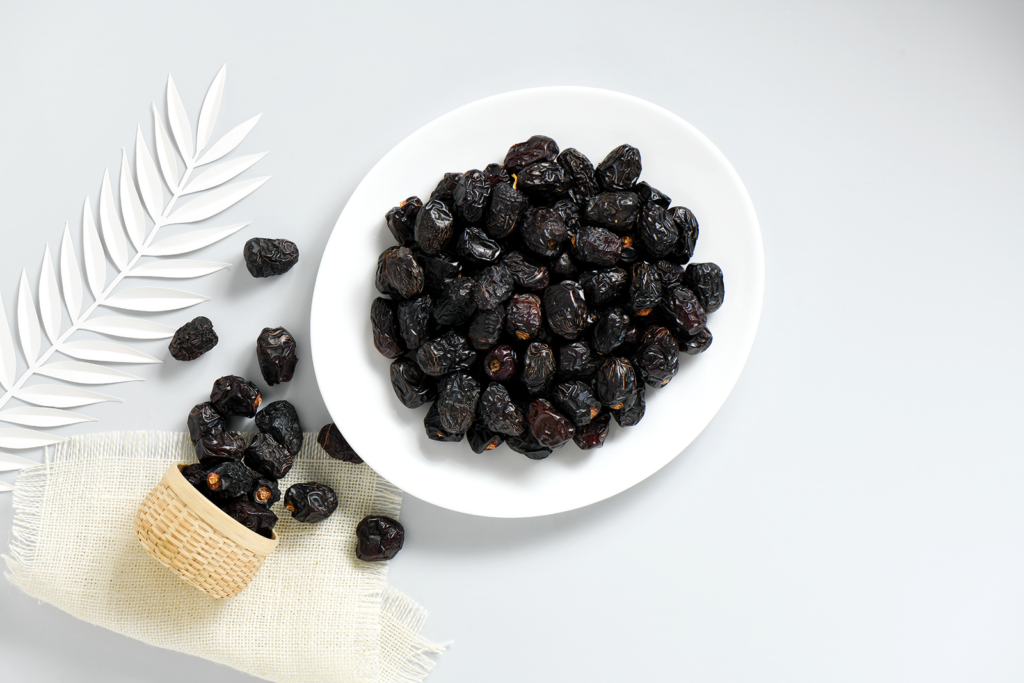
What "Kurma Nabi" actually means
"Kurma Nabi" isn't a botanical variety — it's a market name. In Malaysia, sellers use it almost interchangeably with Ajwa dates, the small, dark, soft-textured date grown in the oases around Madinah, Saudi Arabia. The name sticks because Ajwa's home region is tied to Islamic history, and shoppers recognise "Kurma Nabi" faster than "Ajwa" on a shelf label. Outside Malaysia and Indonesia, the same fruit is usually just sold as Ajwa.
Where it's grown, and why that matters for price
Ajwa palms are concentrated in Al-Madinah's date groves, a much smaller growing region than Medjool's Jordan Valley or Mazafati's Kerman plantations in Iran. Lower supply plus import duties and freight from Saudi Arabia is why Kurma Nabi usually sits at the higher end of a Malaysian date shelf — often above Safawi or Mariami, sometimes close to premium Medjool. A wrinkled, matte-dark skin and a firm-but-yielding bite are the two things to check before paying that price; a shiny, sticky-wet surface usually means the batch has been sugar-glazed or is past its prime.
Why it shows up every Ramadan
Breaking the fast with a date is a long-standing custom across Muslim communities, and it's one of the reasons date sales spike hard in the weeks before Ramadan. Suppliers plan delivery schedules around that spike, and Kurma Nabi is one of the varieties that sells out first because of the name recognition — even buyers who don't know one date grade from another will ask for it by name at a pasar Ramadan stall.
That demand curve also means prices move seasonally. Buying a few weeks before Ramadan, rather than during the first week of the fasting month, is usually cheaper and gives you a better pick of the stock before the popular grades are gone.
Buying it without overpaying
A few checks before you commit to a box:
Ask for the country of origin on the packaging — genuine Ajwa/Kurma Nabi should say Saudi Arabia, not a blend. Check the harvest year if it's printed; dates keep well but older stock is sometimes discounted and sold as "new" without saying so. And compare current Malaysian retail prices before buying in bulk, since the gap between wholesale and retail on this particular variety can be wide.
If the price looks too low for a variety this limited in supply, it's worth asking what's actually in the box — a cheaper Safawi or Mariami date is sometimes sold under the Kurma Nabi name to buyers who won't know the difference by sight alone.
How to store it once you're home
Kurma Nabi's moisture content is lower than fresh Medjool but higher than fully dried Deglet Noor, so it sits in the middle: keep it in an airtight container in the fridge and it holds its texture for months. Left out at room temperature in Malaysia's humidity, it hardens and can develop sugar crystals on the skin within a few weeks — still edible, just drier than when you bought it.
For everyday stock, our full buying guide to kurma in Malaysia covers grading across varieties, and the wholesale pricing guide is the one to check if you're buying for resale rather than a single household.