
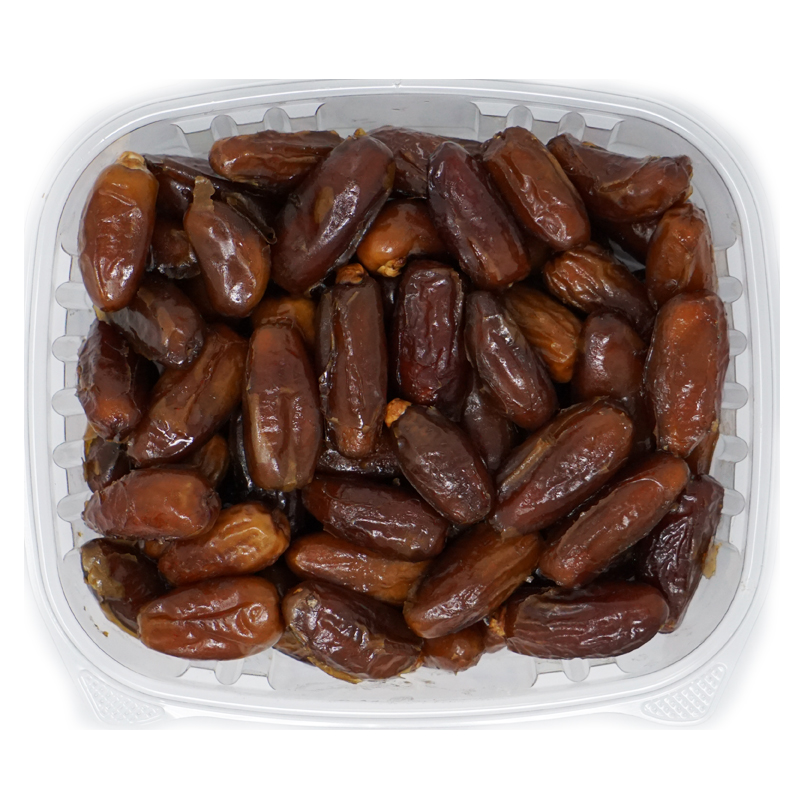
Most people meet Kurma Tangkai on a shop table during puasa: pale brown dates still hanging off a thin branch, packed in a clear tray. For someone selling dates, the more useful question is how that tray got there, and which part of the work belongs to the distributor and which belongs to you.
The product, in one paragraph
Kurma tangkai is Deglet Noor dates left on the strand they grew on. Deglet Noor is semi-dry, translucent amber when held up to light, and comes mostly from Tunisia, with some from Algeria. "Tangkai" describes the packing, not the variety. If a supplier offers you Ajwa or Safawi "tangkai", ask what they actually mean before you order.
Who does what between the farm and your table
The packing house in Tunisia picks, sorts and packs the strands. An importer brings the cartons into Malaysia and clears them. A distributor buys from the importer, holds stock in Malaysia, and sells to shops, stalls and online sellers in smaller quantities. Some companies do two or three of these jobs. Few small sellers can buy straight from an importer, because importers deal in large lots.
So for most kedai and Ramadan stalls, the distributor is the supplier that matters. Their prices, stock levels and honesty decide what you can sell and at what margin.
What to check when the cartons arrive
Open a carton in front of the delivery driver if you can. Look for:
- Strands that are still whole, with the dates attached. A few loose dates in a tray is normal. A tray that is half loose fruit is not what you paid for.
- Dates that look dry on the outside, not sticky or stuck together in a lump.
- No small holes in the fruit and no fine powder in the bottom of the tray. Either can be a sign of insects.
- A label with the origin, the packing or expiry date, and the importer's name. If it is missing, ask why.
Take a photo of anything wrong and send it the same day. A distributor who replaces bad cartons without a fight is worth more than one who is a little cheaper.
Pricing tangkai for resale
Tangkai trays are usually priced per pack, not per kilo, and the strand adds weight that the customer does not eat. When you compare offers, work out the price per kilo of the whole pack and look at how much of it is branch. Our pricing guide explains how reputable dates distributors put their wholesale prices together, and the Malay guide borong dan jual kurma untuk peniaga covers buying in bulk and choosing a supplier.
Ordering ahead of puasa
The main sales window for tangkai is the month before Ramadan and Ramadan itself. Distributors fill their own stock before that, and the best lots go to buyers who confirm early. Place your order well before the rush, and ask the distributor to put the quantity, price and delivery date in writing.
If you are still choosing who to buy from, our post on finding a good dates wholesaler in Malaysia lists what to look for, and it is worth comparing their range against other high-quality dates so you are not tied to tangkai alone.