
There is a real answer hidden in this title. Pills that help with weight loss do exist, but they are prescription medicines, and the NHS attaches conditions to them. The bottles sold as fat burners are something else. This piece sets both against the pace the NHS actually recommends, then looks at where an everyday food like dates sits.
The pace the NHS sets
The NHS page on overweight and obesity tells people to try to lose weight steadily, aiming for 1 to 2lbs, or 0.5 to 1kg, a week. Its method fits in two lines: eat and drink fewer calories than your body uses, and do more physical activity to burn more calories. On average, it says, women use around 2,000 calories a day and men around 2,500. It suggests getting active for 45 to 60 minutes a day, and that time can be broken up into shorter sessions.
The pills that are real come with conditions
The NHS Better Health weight page says weight loss medicines are only suitable for some people on the NHS, depending on things like BMI and whether a person has weight-related health conditions. Its advice is blunt. Only take weight loss medicine if it has been prescribed for you, because these medicines can cause serious side effects.
The obesity page adds that these medicines are usually prescribed alongside diet and lifestyle advice, and that people still need a balanced diet with fewer calories and regular physical activity while taking them. So even the genuine pills are not magic. They sit on top of the same eating and movement plan.
The fat-burner shelf against that pace
Supplements are a different story. A 2021 systematic review by Batsis and colleagues screened 20,504 citations and found 315 randomised controlled trials covering 14 supplements, therapies or combinations. Only 52 were rated low risk of bias and sufficient to support efficacy. Of those, 16 showed a significant difference in weight between groups, ranging from 0.3 to 4.93 kg (PubMed 34159755). The authors write that these products are commercialised as a panacea because the regulatory requirements for showing they work are minimal.
For scale, at the NHS pace of 0.5 to 1kg a week, 4.93 kg would take about five to ten weeks. The 0.3 kg at the bottom of the range would take less than one week.
Herbal products were checked the same way. Maunder and colleagues identified 54 placebo-controlled trials of herbal medicines. Among the herbs with at least four trials to pool, only Phaseolus vulgaris, taken on its own, gave a statistically significant loss compared with placebo, and even that fell short of the 2.5 kg they counted as clinically significant. A few herbs tested in three trials or fewer, such as Irvingia gabonensis, did show larger losses, but the authors say these should be read cautiously because the studies were few and generally of poor quality. Camellia sinensis and Garcinia cambogia showed no effect. Their conclusion was that there is currently insufficient evidence to recommend any of the herbal medicines in the review for weight loss (PubMed 31984610).
A slower plate, with dates on it
The food advice on the NHS obesity page is short: cut down on high fat or sugary foods and eat plenty of fruit and vegetables. Its tips page adds a few practical don'ts. Do not skip meals, because you might end up snacking more because you feel hungry. Do not stock unhealthy food, since popcorn, fruit and rice cakes can be healthier alternatives.
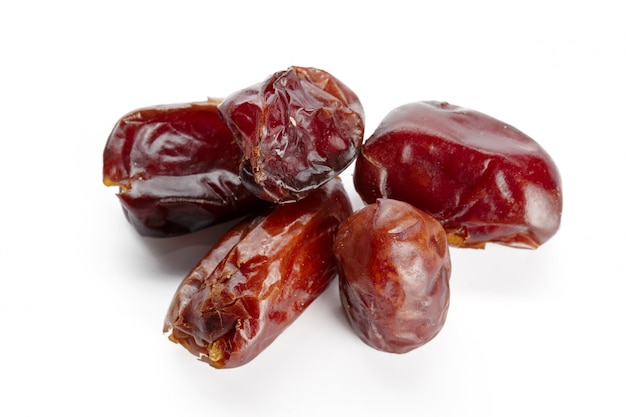
Dates count as fruit here, with one condition. The NHS 5 A Day page says a 30g portion of dried fruit, naming dates, counts as 1 of your 5 A Day, but should be eaten at mealtimes, not as a snack between meals, to reduce the impact on teeth. USDA FoodData Central lists Deglet Noor dates (SR Legacy record 171726) at 282 kcal and 8.0 g fibre per 100g, so a 30g portion comes to about 85 kcal and 2.4 g fibre. Weighed out and eaten with lunch, that is a sweet finish that fits inside the plan instead of sitting outside it.
Buying dates for the week
Buying for a household or an event? Pembekal Kurma Selangor is a supplier site that lists varieties such as Ajwa, Medjool, Safawi, Mazafati and Mariami. Closer to home, Jual Kurma's about us page says it delivers across the country and takes questions and orders, and its contact page gives the WhatsApp number to use. Other date articles sit on the blog.
This article is general reading, not personal advice. The NHS says that anyone with a medical condition, a special diet for their health or an eating disorder should talk to a GP or a healthcare professional before making changes to their lifestyle.